

Although camels are not native to Turkey, their remarkable adaptation to Anatolia is undeniable. Both camels and the rugged landscapes of the region are legendary for their ability to endure harsh conditions.
Camels are widely known for their ability to store fat in their humps, but they have many more fascinating traits. For instance, they have a unique gait, moving both legs on the same side simultaneously when running. They can survive in temperatures of 50°C and endure up to nine days without food or water. During this time, even if they lose 40% of the water in their bodies nearly half they can still survive. When they finally find a water source, they can drink up to 80–90 liters, draining the supply in one sitting.
These resilient creatures are equipped with specialized features for surviving the harsh conditions of deserts, such as closable nostrils for sandstorms, protective eyelashes, and exceptional vision and smell. Unsurprisingly, they navigate Cappadocia’s rugged valleys with ease. Their split toed feet, which are ideal for walking on sand or snow, also make them perfectly suited for the region’s challenging terrain.
Camel Shaped Peribacasi
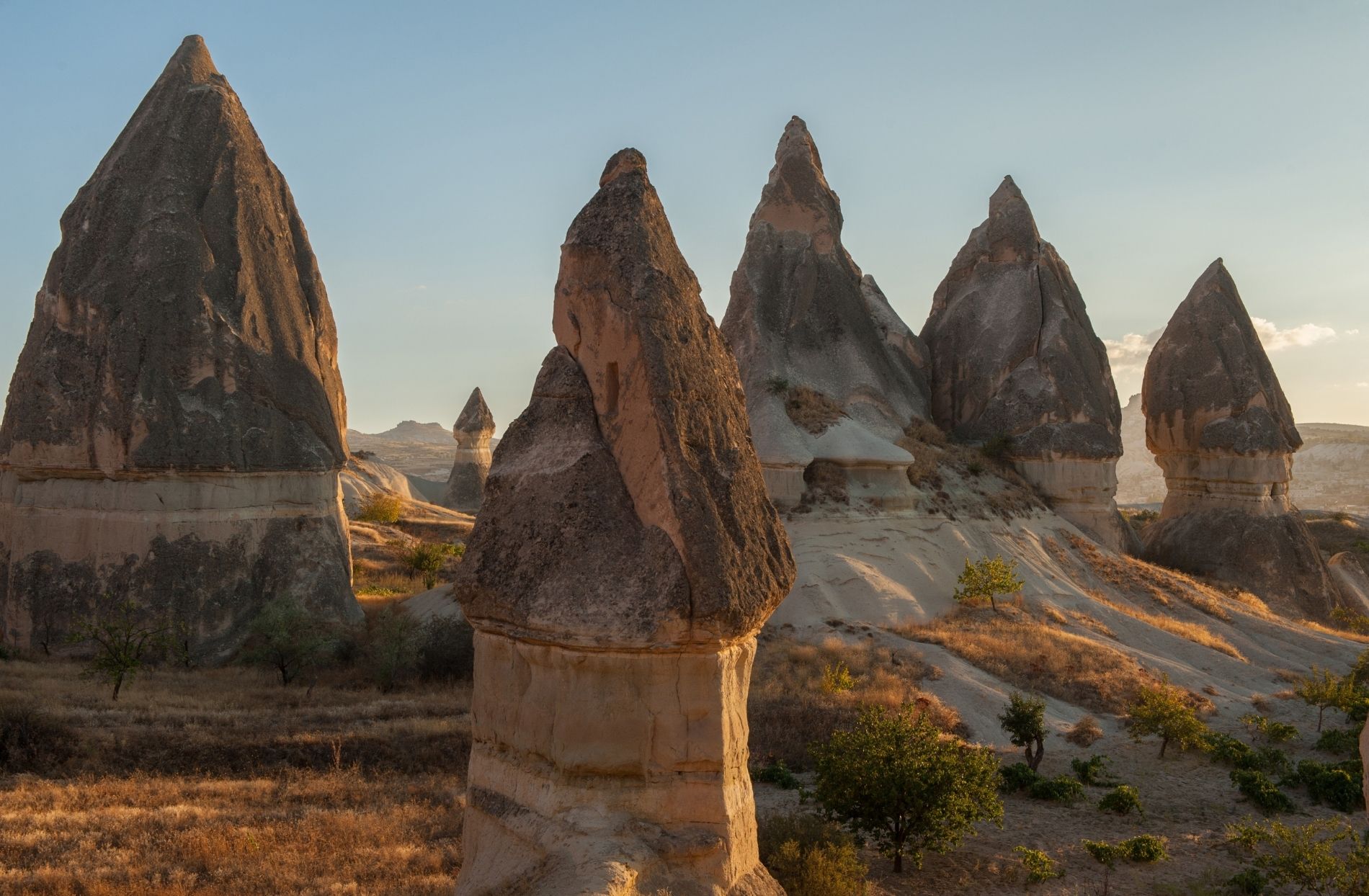
A fairy chimney shaped like a camel is one of Cappadocia’s most iconic and amusing natural formations. Known as the Camel Rock, this unique fairy chimney, located in the Devrent Valley (also called Imagination Valley), resembles the silhouette of a sitting camel.
This fascinating formation, created by centuries of wind and water erosion, is a prime example of the whimsical shapes that nature can carve out of volcanic tuff. Visitors often stop by to marvel at this natural “sculpture,” making it a popular photo spot and a highlight of tours in the region. The Camel Rock perfectly encapsulates the enchanting and surreal charm of Cappadocia’s landscape.
When you see these majestic creatures strolling through a valley or resting in the shade of a fairy chimney, their mystical appearance and colors make it immediately clear how deeply they are connected to Cappadocia. In fact, Cappadocia even features a fairy chimney shaped like a camel, further emphasizing this bond.
Once widely used for long distance travel and cargo transport, camels are a natural fit for a region filled with caravanserais like Cappadocia. In the old rock-carved stables of the area’s historic homes, you can still spot “takas” raised feeding troughs specifically designed for camels. These remnants provide a glimpse into how common these animals once were in this land steeped in history and trade.
A Camel Ranch in Cappadocia
